 The development Research and Projects Centre (dRPC) has established a strong national track record in technology and digital rights programming in Nigeria, responding to the rapid expansion of the digital economy and its implications for rights, inclusion, and democratic participation. Grounded in a rights-based and gender-responsive approach, dRPC’s work in this space recognises that digital transformation, while enabling new opportunities for civic engagement and economic participation, has also generated new forms of harm, particularly for women, youth, and marginalised groups. These include online harassment, surveillance, exclusion from digital opportunities, and technology-facilitated gender-based violence (TF-GBV). dRPC’s digital rights programming therefore focuses on strengthening protections, accountability, and inclusive governance within Nigeria’s evolving digital ecosystem.
A flagship pillar of dRPC’s work in this area is its leadership on research and evaluation related to technology-facilitated gender-based violence and digital civic space. In 2025, dRPC led one of Nigeria’s first in-depth mixed-methods studies on TF-GBV against women in politics under the ALIGN programme, combining qualitative research, digital data analysis, and institutional review of political parties and regulatory frameworks. The study demonstrated how digital abuse functions as a structural barrier to women’s political participation and highlighted critical gaps in legal, institutional, and platform-level responses. This body of work positions dRPC at the forefront of evidence generation on digital harms, online safety, and gender-responsive digital governance in Nigeria.
Beyond research, dRPC plays a direct role in national digital policy and legislative processes. Notably, dRPC was one of only three national NGOs out of thirty-six organisations to make a formal submission at the public hearing on Nigeria’s digital rights and governance framework, contributing a Policy Brief and Technical Memorandum to the National Assembly Joint Committees on ICT, Cybersecurity, and the Digital Economy. This rare level of national representation reflects dRPC’s credibility as a technical authority on digital rights, gender-responsive regulation, and accountability. dRPC has also engaged in global digital governance spaces, including participation in the United Nations International Conference on Electronic Governance (ICEGOV 2025), strengthening links between Nigerian civil society perspectives and international policy debates.
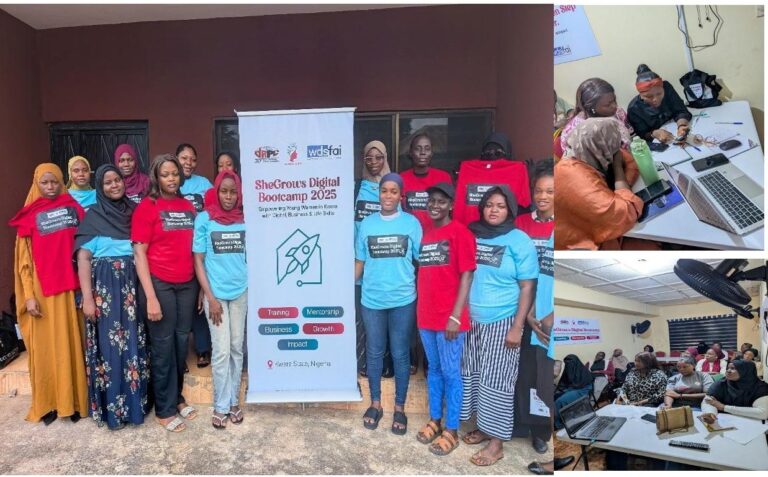
Importantly, dRPC has demonstrable experience in the award, management, and evaluation of digital rights grants to Nigerian civil society organisations. Through the NSI Digital Rights Portfolio supported by the Ford Foundation, dRPC served as an intermediary organisation responsible for competitive grant selection, technical oversight, capacity strengthening, and end-line evaluation of digital rights projects implemented across multiple states. This included managing a rigorous selection process from over 800 applications, awarding grants to Nigerian NGOs working on women’s digital entrepreneurship, online safety, and digital inclusion, and providing structured support on safeguarding, monitoring, and rights-based programming. Through this integrated model of grant management, evaluation, and policy engagement, dRPC has built a strong and credible Technology and Digital Rights programming portfolio that bridges evidence, practice, and reform.