On 9 December, stakeholders gathered in Abuja for the launch of Reparation Priorities for Survivors of Conflict-Related Sexual Violence Perpetrated by Boko Haram in North-East Nigeria, a study that places the voices, priorities, and lived realities of survivors at the centre of the national conversation on reparations. The event brought together survivors of conflict-related sexual violence, senior government representatives, development partners, civil society organisations, researchers, the media, and other actors committed to justice, healing, and long-term recovery in the North-East.
The ceremony opened with reflections from the Special Adviser to the Minister on Health, Dr Salma Anas-Ibrahim, who situated the study within over a decade of research led by the Development Research and Projects Centre (dRPC) on conflict-related sexual violence in Northeast Nigeria. She spoke of earlier collaborative work on conjugal slavery in war and described how this research laid the groundwork for the Nigeria component of the Global Reparations Study. Commissioned in 2023 by the Global Survivors Fund, the study was designed through a survivor-centred, co-creation approach that positioned survivors not merely as respondents, but as narrators and analysts of their own experiences. See full report HERE
The research was conducted in Borno, Adamawa, and Yobe States, as well as in Abuja, and drew on in-depth interviews with 82 women survivors between the ages of 18 and 75. Many had endured multiple forms of sexual violence during abduction, with a significant number experiencing these violations during childhood. Implemented by the dRPC in partnership with the Grassroots Researchers Association and the Explore Humanitarian Aid Initiative, with contributions from members of the Women and Children Conflict Survivors Foundation and support from the Global Survivors Fund, the study documents survivors’ perceptions of reparations and sets out practical, context-specific recommendations for national and state-level policymakers.
Dr Salma emphasized that the launch was not intended as a ceremonial endpoint, but as a platform for policy engagement and action. Designed in collaboration with survivor leaders, the event created space for survivors to speak directly to decision-makers, to share their priorities, and to articulate the interventions needed to close existing gaps in reparative responses. She noted that, as a woman and an indigene of the Northeast, the research held deep personal meaning, and she welcomed participants in a spirit of shared responsibility and commitment. See full report HERE
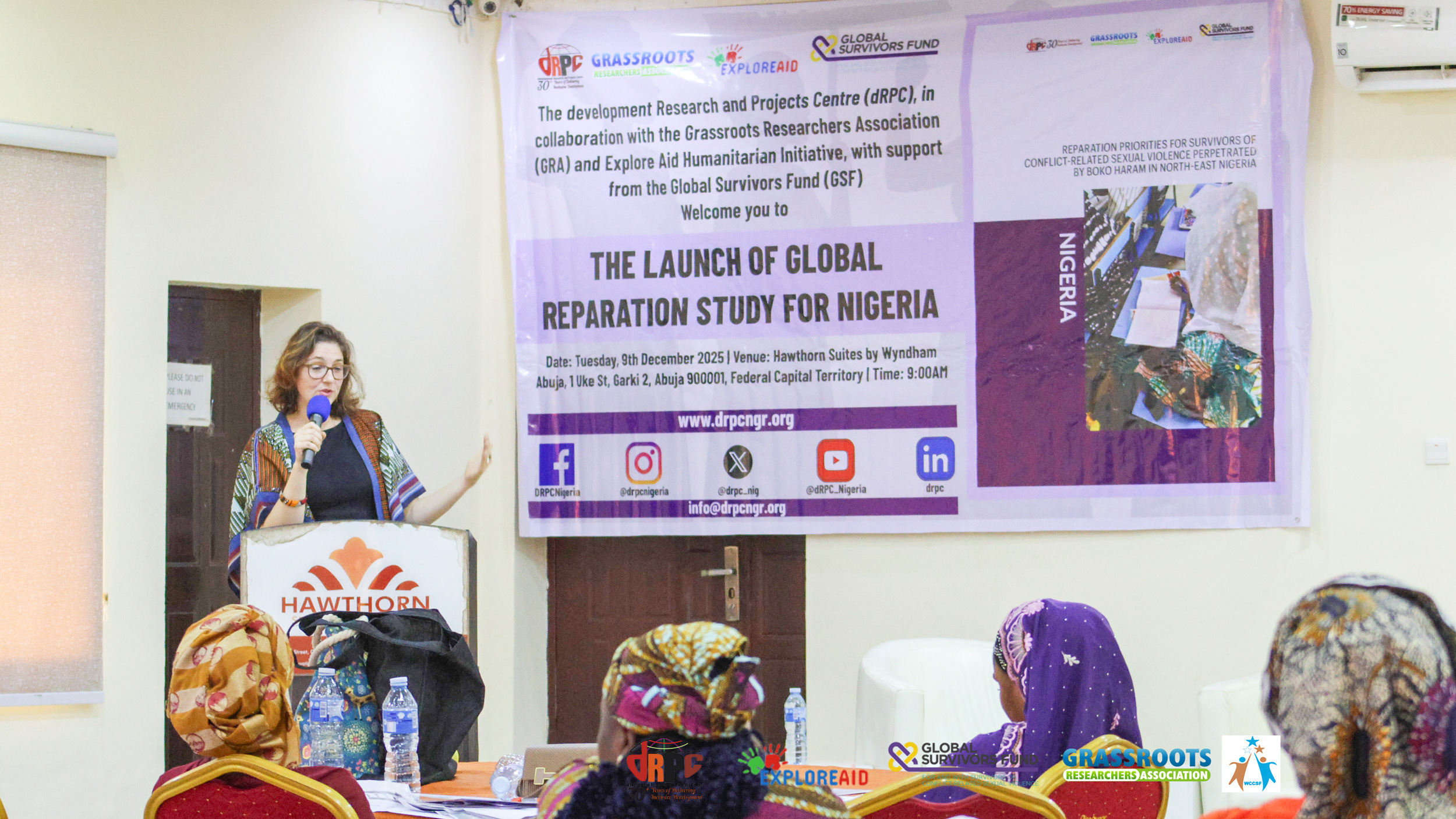
Speaking on behalf of the Global Survivors Fund, the funders reinforced the central premise of the study, that survivors must be at the heart of efforts to address conflict-related sexual violence. They underscored that the testimonies contained in the report are survivors’ own words, reflecting an approach rooted in dignity, agency, and co-creation. As part of a broader Global Reparations Study spanning more than 20 countries, the Nigeria report maps opportunities for reparations and strengthens ongoing engagement with government and civil society partners.
The Global Survivors Fund highlighted that education, healthcare, livelihoods, and psychological support remain urgent and unmet needs for many survivors, particularly for those who bore children as a result of the violence and continue to face stigma years later. As the launch coincided with the close of the 16 Days of Activism, the Fund called for renewed solidarity and sustained commitment, expressing the hope that survivors’ unmet needs would no longer be met with silence, but with recognition and action. See full report HERE
A survivor representative then addressed the gathering, welcoming participants on behalf of survivor leaders and reflecting on the significance of the study. She spoke of participation as an act of agency, a deliberate choice to ensure that survivors’ experiences were documented truthfully and that their needs were clearly understood. The narrative she shared emphasized that reparations are not acts of charity, but justice owed. Survivors called for recognition of their rights to safety, healthcare, education, livelihoods, reintegration, and dignity, and expressed gratitude to the Global Survivors Fund, the dRPC, and partner organisations for walking alongside them throughout the research process.
Policy perspectives were further reinforced in remarks delivered on behalf of the National Institute for Policy and Strategic Studies by Professor Umar Musa, representing the Director-General, Professor Ayo Omotayo. He described the study as a vital contribution to Nigeria’s peacebuilding and national security agenda, noting that conflict-related sexual violence has left deep and enduring wounds on individuals and communities. He emphasized that reparations must extend beyond symbolic gestures to include comprehensive healthcare, psychosocial support, legal assistance, education, and livelihood opportunities, all aimed at restoring dignity, agency, and hope. He affirmed NIPSS’s readiness to collaborate in translating the report’s recommendations into actionable policy options. See full report HERE
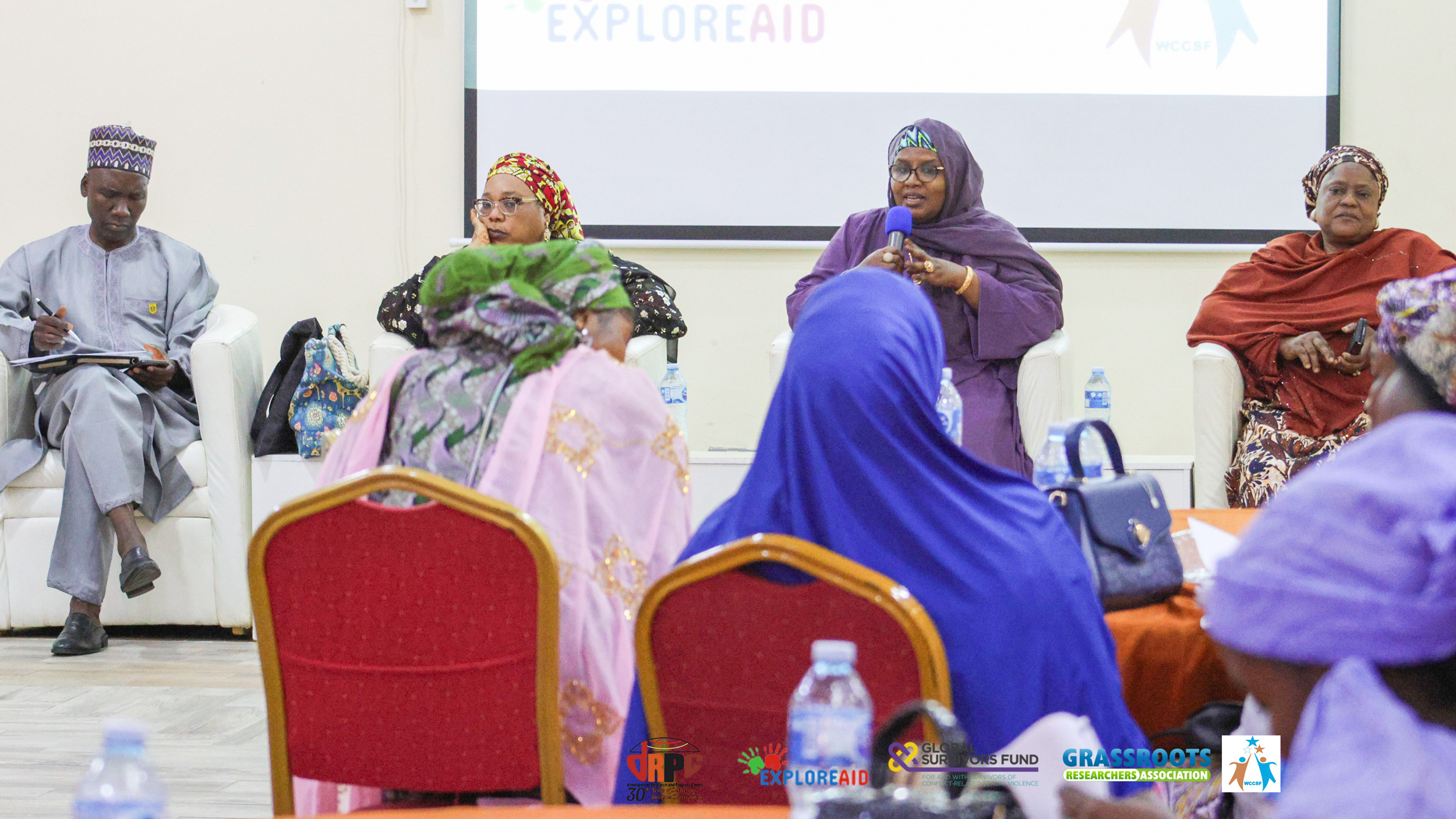
The programme also featured panel sessions that deepened collective reflection and dialogue. Partner NGOs shared insights from their collaboration, tracing the journey from research design through fieldwork to the launch of the report. A session with representatives of the Honourable Commissioners from Borno, Adamawa, and Yobe States explored state-level perspectives and responsibilities, while survivors presented the study’s key findings and recommendations, reinforcing the principle of survivor leadership.
By the close of the event, the launch had become more than a presentation of research. It stood as a collective affirmation of the need for survivor-centred reparations, accountability, and sustained policy action. The gathering marked a significant step toward ensuring that survivors of conflict-related sexual violence in North-East Nigeria are seen, heard, and supported, and that the path from evidence to action remains guided by their voices and priorities. See full report HERE