From 1 to 4 February 2026, the development Research and Projects Centre (dRPC) joined traditional leaders, policymakers, civil society actors, youth leaders, jurists, and international development partners at the Conference of African Traditional and Community Leaders on Gender-Based Violence (GBV) Prevention, held in Lagos State, Nigeria. The convening marked a defining moment in Africa’s collective efforts to reposition traditional leadership at the Centre of GBV prevention and norms transformation. Organized in collaboration between Ford Foundation and UN Women, and led strategically by the Council of Traditional Leaders of Africa, the conference brought together cultural custodians from across the continent under the theme Driving Norms Change and Prevention Through Cultural Custodianship.
At its core, the conference challenged the notion that GBV prevention can be achieved through legal reform alone. Instead, it emphasized the need for deep, community-rooted transformation of social norms, values, and practices, many of which are shaped and sustained through traditional institutions. Participants affirmed that culture is dynamic and can be harnessed as a powerful force for justice, dignity, and gender equality.
High-Level Political and Institutional Leadership
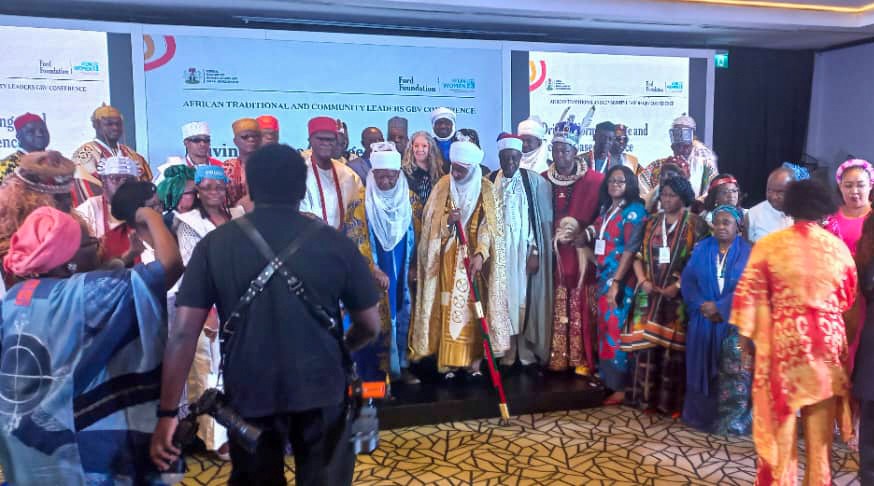
The opening ceremony reflected the political and institutional weight of the convening. The conference was officially launched by Babajide Sanwo-Olu, Executive Governor of Lagos State, underscoring Nigeria’s role as a regional convener of dialogue on GBV prevention.
Senior representatives of the Ford Foundation and UN Women delivered welcome remarks, alongside eminent traditional leaders and government officials. Keynote contributions framed GBV as a structural justice issue requiring coordinated action across customary and statutory systems, intergenerational partnerships, and institutional accountability mechanisms.
Culture, Tradition, and Norms Change
Over four days of deliberations, traditional rulers and stakeholders examined how cultural authority can be mobilized to challenge harmful practices while preserving positive traditions. Discussions explored the responsibility of traditional leaders to publicly confront harmful gender norms, redefine masculinities within cultural contexts, and embed gender-equitable values into rites, customs, and community governance processes.
These conversations reinforced the role of traditional rulers as custodians capable of reshaping narratives and influencing behavior change at scale.
Justice, Accountability, and Survivor-Centered Approaches
Justice and accountability featured prominently throughout the conference. Participants examined pathways for harmonizing customary and statutory justice systems, with a strong emphasis on survivor-centered approaches.
Deliberations highlighted the need to eliminate impunity within traditional dispute resolution mechanisms, align customary decisions with constitutional protections, and strengthen referral pathways between traditional authorities and formal judicial institutions. Trust, accountability, and deterrence were recognized as essential pillars of effective GBV prevention.
 Intergenerational Dialogue and Youth Engagement
Intergenerational dialogue emerged as a critical theme, with structured engagement between youth leaders and traditional rulers creating space for mutual learning and collaboration.
Youth participants emphasized the importance of inclusion in governance processes, the strategic use of digital advocacy and social media to challenge harmful norms, and mentorship as a tool for sustaining reform momentum across generations.
Technology and Innovation for Prevention
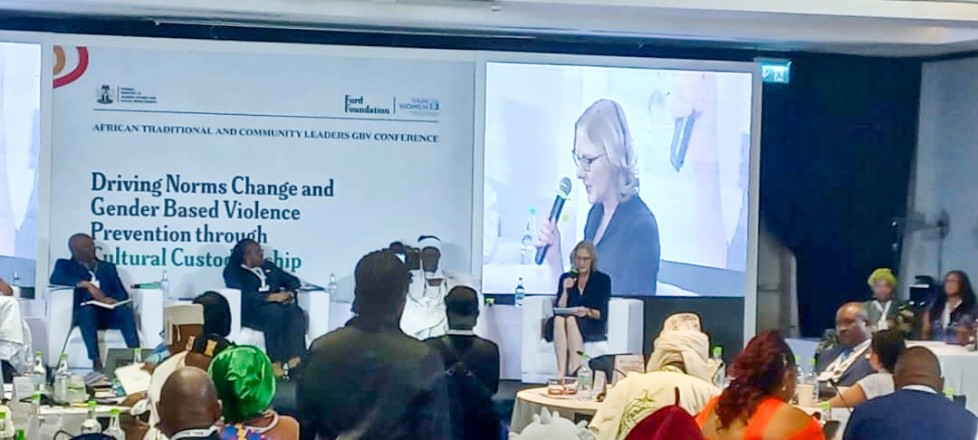
Innovation and technology also featured strongly in the discussions. In a keynote presentation, Sanusi Lamido Sanusi spoke on the potential for traditional institutions to leverage technology in advancing gender equality.
He proposed the development of a real-time, community-based digital platform to collate and track GBV cases, enabling faster response and prevention rather than retrospective documentation. He noted that data is often collected only after harm has occurred, serving as stories of regret rather than tools for prevention, and argued for technology as both a data system and a digital storytelling platform to challenge harmful narratives.
Regional Roadmaps and Collective Action
Participants engaged in regional working sessions representing Anglophone West and Central Africa, Francophone West and Central Africa, Southern Africa, and Eastern Africa.
These sessions produced region-specific roadmaps outlining priority actions, including ending harmful traditional practices, strengthening collaboration with government ministries, engaging men and boys as allies, institutionalizing monitoring and evaluation frameworks, and scaling effective prevention models across borders.
Adoption of the Lagos Declaration
A defining outcome of the conference was the adoption of the Lagos Declaration on Traditional Leadership for Norms Change and GBV Prevention.
The Declaration represents an unprecedented collective commitment by African traditional leaders to institutionalize prevention-centered approaches to GBV, strengthen collaboration with governments and development partners, promote accountability within customary governance structures, advance survivor-centered justice systems, and develop measurable frameworks for norms transformation.
dRPC’s Participation and Contribution
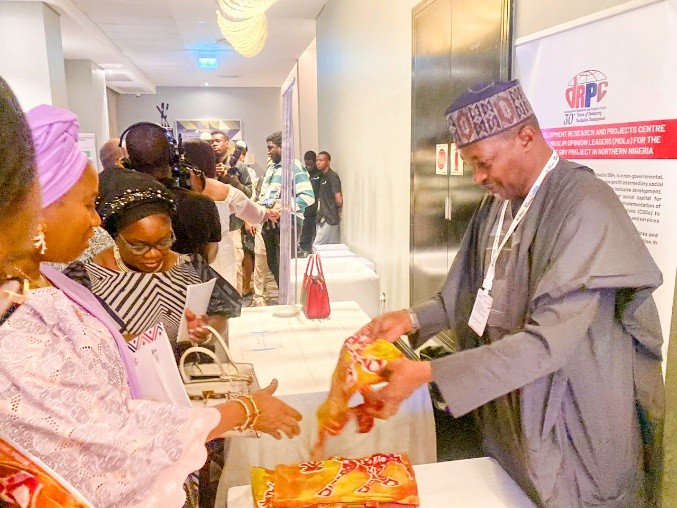
For dRPC, the conference provided an important platform to showcase its work, share educational materials, and contribute to technical and policy conversations alongside other Ford Foundation grantees working on GBV prevention in Nigeria.
The engagement reinforced dRPC’s commitment to evidence-based, culturally grounded approaches to gender justice.
Outcomes and Forward Pathways
As the conference concluded, participants emphasized that the Lagos convening marked the beginning of a sustained continental movement rather than a standalone event. Key outcomes included strengthened partnerships among traditional institutions, governments, and development partners, as well as commitments to structured follow-up, monitoring, and evaluation.
Implementation frameworks, technical assistance, and resource mobilization will be critical to translating commitments into measurable change.