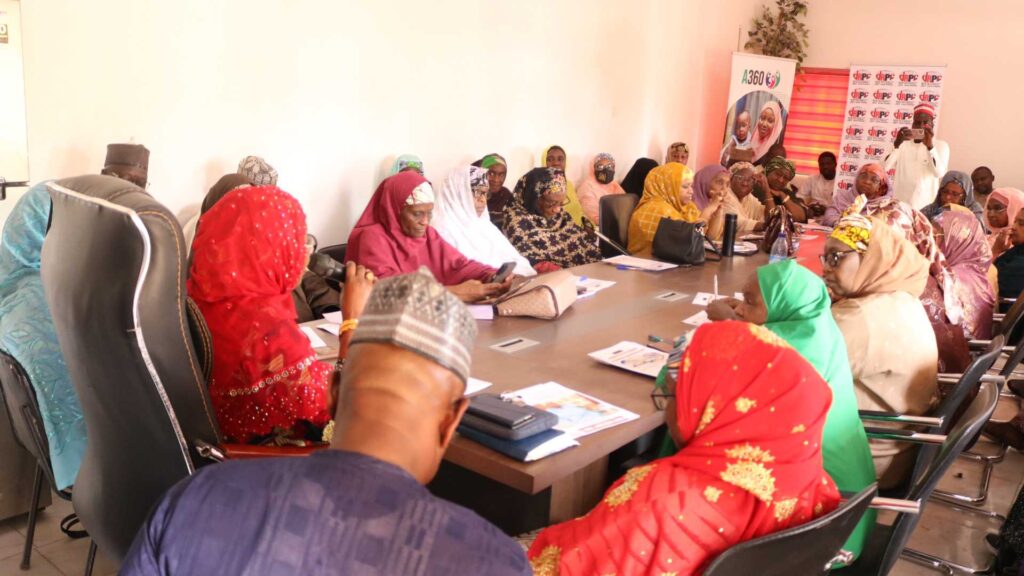
On Monday, 13 April 2026, the Kano State Ministry of Women Affairs, Children and Persons with Special Needs, in collaboration with the development Research and Projects Centre (dRPC), convened the inception meeting of the Grannies Network for Change (G-NEC) (The KAKA Project) (2026–2027) in Kano State.
The meeting marked the formal launch of a community-driven, intergenerational initiative designed to prevent gender-based violence (GBV) and improve girls’ access to and completion of secondary education across selected communities in Kano and Jigawa States.
Context
The KAKA Project responds to persistent structural challenges in Northwest Nigeria, including high rates of physical violence against women, early marriage, and low secondary school enrollment and completion among girls aged 12 to 17. These issues are compounded by entrenched gender norms and economic restrictions that limit women’s autonomy and decision-making power.
Recent data highlights the scale of the challenge, with economic rights denial indices estimated at 22 percent nationally, and significantly higher at 40 percent in Kano and 42 percent in Jigawa. These constraints directly contribute to poor educational outcomes for girls and increased vulnerability to GBV.
The G-NEC Approach
At the core of the project is a strategic focus on the “Kaka”, grandmothers in multigenerational households who hold significant social influence. The initiative recognizes their role as key agents of change within family and community structures.
Through participatory dialogue and community engagement, dRPC will identify, mobilize, and empower these grandmothers to influence household norms and decision-making. The goal is to shift attitudes and behaviours among male household heads and other family members toward:
- Reducing physical violence against wives
- Increasing support for girls’ secondary education, including enrolment, retention, and completion
Target Reach
The project will be implemented across 10 high-burden communities, six in Kano State and four in Jigawa State, selected based on prevalence indicators related to GBV and girls’ education. It aims to directly engage:
- 2,000 households
- 2,000 male household heads
- 2,000 grandmothers (Kaka)
- 3,000 daughters-in-law
- 8,000 adolescent girls at risk of not transitioning through or completing secondary school
The inception meeting brought together government stakeholders, community representatives, and development partners to align on the project’s objectives and implementation strategy.
A central outcome of the meeting was the formal introduction of the Grannies Network for Change (G-NEC) as an advocacy and action platform. The network is designed to mobilize grandmothers across Kano, Jigawa, and potentially other northern states to collectively address the rising incidence of GBV.
Participants emphasized the importance of addressing economic rights denial, particularly restrictions on women’s ability to work, as a critical driver of girls’ school dropout and early marriage. The meeting also reinforced the need for intergenerational engagement, with youth inclusion identified as essential to sustaining long-term change.
An Intergenerational Model for Change
G-NEC is structured as an intergenerational intervention, integrating both elder influence and youth engagement. While grandmothers lead advocacy and norm change within households, young people will be engaged through awareness and education activities focused on GBV prevention, economic empowerment, and the value of girls’ education.
This dual approach is intended to create a reinforcing cycle of change, where both tradition and emerging perspectives contribute to safer, more equitable communities.
Looking Ahead
The launch of G-NEC signals the beginning of a coordinated effort to leverage community structures and cultural dynamics in addressing GBV and educational inequities. As implementation progresses, the project will continue to strengthen local networks, build capacity, and generate evidence on the effectiveness of grandmother-led interventions in shifting gender norms.