On 28 November 2025, stakeholders from across Nigeria convened in Abuja for a national dialogue on a rising concern, the escalation of digital threats targeting women who participate in politics. The gathering could not have been more timely. It took place during the global campaign of the 16 Days of Activism, which in 2025 is centred on the theme, UNiTE to End Digital Violence against All Women and Girls. The discussions in Abuja echoed this global call, bringing the spotlight directly to how online spaces are shaping, and in many cases undermining, women’s political participation in Nigeria.
The event, convened by the development Research and Projects Centre with support from ODI-ALIGN, marked the culmination of a year-long research project examining the scale, forms, and consequences of technology-facilitated gender-based violence in politics. The research traced how social media platforms, messaging applications, online news spaces, and coordinated digital networks are used to intimidate, discredit, or silence women who aspire to or hold political office. It also assessed how political parties respond, where accountability gaps lie, and what reforms are necessary to create safer digital and political environments for women.
The room reflected a diverse coalition of actors. The Minister of Women’s Affairs was represented by her Special Adviser, Mallam Nasiru Zakari, and the presidency was represented by the Special Adviser on Health, Salma Anas Ibrahim. Development partners, including ODI Global, joined through representatives such as Dr. Jan Milchako. Political stakeholders under the platform of IPAC, members of the civil society community, academia, and the media added further depth to the dialogue. Their presence conveyed a shared understanding that digital harm is no longer peripheral, it is now a central barrier to democratic inclusion.
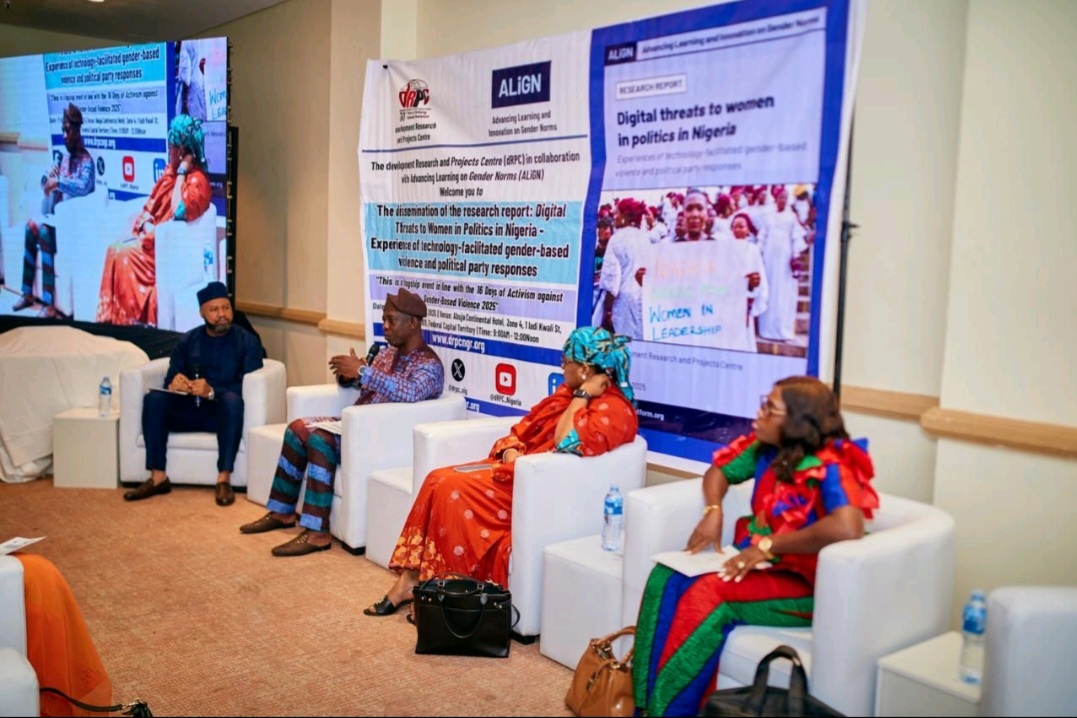
The day unfolded through three thought-provoking panel engagements.
- The first session, Digital Threats to Women in Politics, Evidence and Implications, unpacked the research findings and the broader implications for participation, credibility, and safety.
- This was followed by a fireside conversation, Political Parties and Technology-Facilitated GBV, From Silence to Action, which examined the role of party structures in preventing or perpetuating online abuse.
- The final panel, Gender Norms, Media Narratives and Women in Appointive Positions in Nigeria, One Year On, explored how media framing continues to shape public attitudes and influence opportunities for women in leadership. Across every panel, one thread ran consistently. The digital environment has become an influential political arena, and without systemic reforms that prioritize safety, transparency, and accountability, women risk being further pushed to the margins. The 2025 theme of the 16 Days of Activism echoed through these discussions, reinforcing that digital violence is not only a gender issue, it is a democratic issue.
As the launch concluded, participants left with renewed clarity on the urgent need to safeguard women’s participation in the digital and political spheres. The event did more than share evidence, it catalyzed a collective commitment toward actionable change.
The full research product is available here: https://drpcngr.org/digital-threats-to-women-in-politics-in-nigeria/